
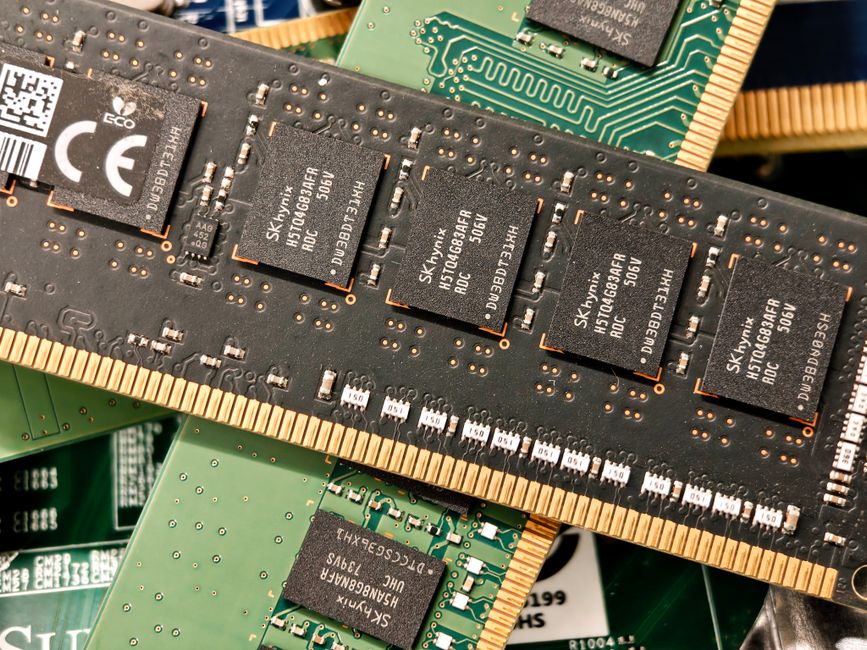
Australian IT budgets are about to feel a squeeze that has nothing to do with wages or rent: memory chips. Counterpoint Research reports that surging AI inference workloads have pushed the global NAND flash market to record revenue, and the flow-on effect is already reaching SSD and cloud storage pricing in Sydney, Melbourne and Perth. The short answer for Australian businesses: budget for higher hardware and cloud storage costs through 2026, and lock in supplier or cloud contracts now before the next price step-up.
What is the Concept
NAND flash is the memory technology behind SSDs, enterprise storage arrays and the storage tiers inside every major cloud platform. For years, NAND demand tracked consumer electronics and PC sales. That has flipped. Counterpoint's data shows AI inference, not just AI training, is now a primary demand driver, because every chatbot, copilot and recommendation engine needs fast access to cached data, model weights and vector embeddings while it is running, not just while it is being built.
Samsung, SK Hynix, Micron, Kioxia and Western Digital control the bulk of NAND supply, and Counterpoint attributes the record revenue to enterprise SSD orders from hyperscale data centres racing to keep pace with AI inference traffic. When these five suppliers raise prices in a tight market, the increase moves through server manufacturers, data centre operators and cloud providers before landing on the invoice of an Australian business using AWS, Azure or Google Cloud.
Why It Matters in Australia (2025–2026 Context)
Australia's local cloud and data centre footprint is expanding fast, and every new rack of servers deployed in an AWS Sydney availability zone, an Azure Melbourne region, or a NEXTDC or Macquarie Data Centres facility relies on enterprise SSDs bought at global market prices. As NAND costs rise, providers either absorb the margin hit or pass it through in AUD-denominated hosting and storage fees, and 2026 pricing signals point toward pass-through rather than absorption.
For Australian SMEs and startups, this is not an abstract supply chain story. Storage line items inside cloud bills, particularly for object storage, database volumes and backup, are set to climb at a time when many founders assumed AI-related costs would only show up as GPU or API spend. Procurement and finance teams that model 2026 budgets on last year's storage rates will be caught short.
How AI Is Changing This
The industry's cost conversation has been fixated on GPUs, but inference at scale is a storage-hungry process. Retrieval-augmented generation (RAG) systems, AI copilots and recommendation engines constantly read from vector databases and cached context, which means fast, high-endurance enterprise SSDs are consumed at a rate that pure training workloads never demanded. This is the shift Counterpoint is capturing in its NAND revenue figures.
Australian businesses adopting AI copilots inside customer service, finance or operations tools are contributing to this demand even at modest scale, because every RAG pipeline or AI search feature they switch on adds to the aggregate pull on NAND supply. The result is a feedback loop: wider AI adoption in Australia increases local storage consumption, which reinforces the global pricing pressure Counterpoint is reporting.
Real-World Examples
NEXTDC, the ASX-listed data centre operator with facilities across Sydney, Melbourne, Brisbane and Perth, has continued expanding capacity to meet AI-driven enterprise demand, and rising component costs for storage-dense server configurations are a direct input into that build-out economics. Data centre operators absorbing higher NAND costs typically reflect them in colocation and managed storage pricing within 12 to 18 months.
Australian SaaS companies scaling AI features, such as design and productivity platforms adding AI-assisted search and generation, are seeing infrastructure spend grow faster than user growth alone would predict, precisely because inference-heavy features draw more on fast storage. This illustrates how a global chip market report translates into a real line item on a local company's profit and loss statement.
Practical Insights / Actions
Most businesses treat AI cost planning as a GPU and API-pricing exercise and overlook what we call the AI Storage Tax: the quiet, compounding rise in storage costs that accompanies every inference-heavy feature they ship. Ignoring it while chasing compute discounts is a costly blind spot, because storage often scales with usage in ways GPU contracts do not.
To manage exposure, apply a simple 3-Layer Storage Shield: first, audit current storage architecture for tiering and deduplication opportunities so hot, expensive SSD capacity is reserved for genuinely latency-sensitive data; second, negotiate multi-year or committed-use storage contracts with cloud providers before further NAND-driven increases land; third, evaluate hybrid or on-premises storage for predictable, high-volume workloads where cloud storage pricing volatility is highest. RP SoftTech works with Australian businesses to run this kind of infrastructure and AI-cost audit, turning a reactive budget shock into a planned, negotiated cost line.
Future Outlook
Analyst consensus aligned with Counterpoint's findings suggests NAND supply will remain tight through 2026 as AI inference workloads keep growing faster than manufacturers can add capacity, with meaningful easing not expected before 2027. Australian businesses should treat current pricing as a floor, not a ceiling, when planning next year's infrastructure budgets.
Companies that lock in storage contracts, right-size their architecture, and build AI cost forecasting into their 2026 planning now will hold a real cost advantage over competitors who only react once their cloud invoice spikes.
Conclusion
The record NAND revenue Counterpoint is reporting is not a distant chip industry footnote, it is a preview of higher storage costs already reaching Australian cloud bills in 2026. Businesses that audit their storage architecture, negotiate contracts early and plan for the AI Storage Tax will protect their margins; those that don't will absorb the increase by surprise. If you want a clear picture of how AI-driven infrastructure costs will affect your business this year, RP SoftTech can run a storage and AI-cost audit tailored to your setup.