What Does the AI Server Stock Boom Mean for Canadian Tech Investors in 2026?
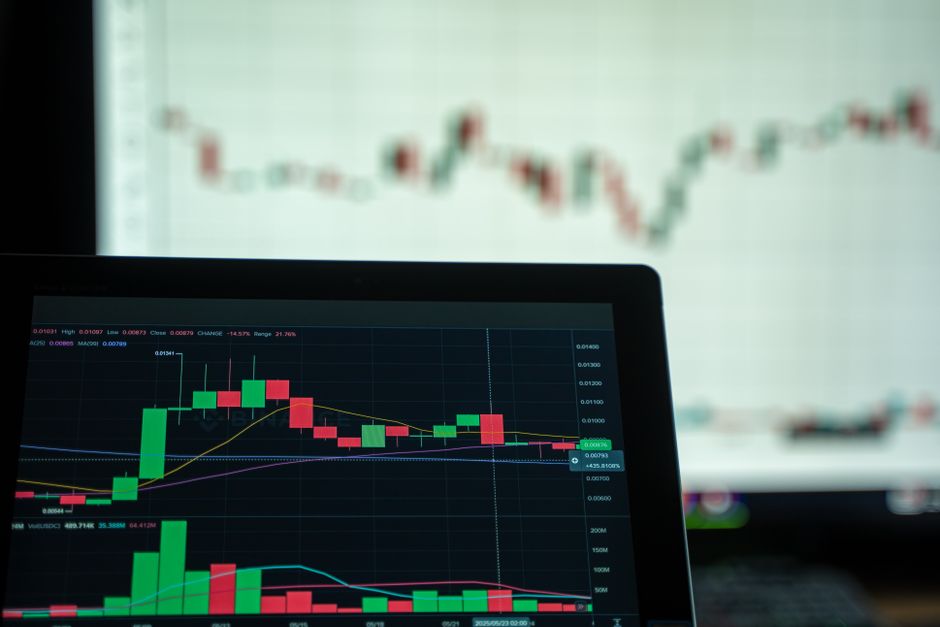
When a major AI server maker saw its stock jump 20% in a single session as gross margin nearly doubled, most headlines treated it as a Silicon Valley curiosity. It isn't. For business owners in Toronto, Vancouver, and Calgary, that earnings surprise is a preview of a cost curve about to hit every Canadian company buying into AI: server hardware margins are climbing because demand for AI-ready infrastructure has outrun supply, and that scarcity now shows up in every quote a Canadian CTO gets from a vendor.
What is the Concept
An AI server is a physical computing system built specifically to run machine learning and generative AI workloads, packed with high-end GPUs, fast memory, and specialized cooling. Companies that manufacture and assemble these servers have historically operated on thin hardware margins, similar to selling laptops. What changed in 2025 and 2026 is that GPU scarcity, complex liquid-cooling requirements, and enterprise urgency to deploy AI let these manufacturers charge premium prices while their own component costs stayed flat, doubling gross margin almost overnight.
That single data point matters because gross margin on AI hardware is a leading indicator of enterprise AI capital spending. When manufacturers can double margin while volume keeps rising, it signals that buyers are not price-shopping; they are paying to secure supply before competitors do. Canadian businesses evaluating AI adoption in 2026 are stepping into that same seller's market, whether they are buying, leasing, or renting compute.
Why It Matters in Canada (2025-2026 Context)
Canada has quietly become an attractive location for AI infrastructure because of cheap hydroelectric power in Quebec, cold climates that reduce cooling costs in Manitoba and Ontario, and federal incentives for clean-energy data centres. That has pulled data centre operators and hyperscalers into Canadian markets faster than expected, and it means Canadian CFOs are negotiating for the same scarce AI servers as buyers in the US and Europe, often with less purchasing leverage.
The practical impact for a mid-sized Canadian company in 2026 is straightforward: a planned AI infrastructure budget set six months ago is likely underfunded today. Whether the AI project is a customer service chatbot for a Vancouver retailer or a fraud-detection model for a Toronto fintech, the underlying compute is priced against a global supply squeeze, not local demand alone. Businesses that assumed AI hardware costs would fall in line with typical tech deflation are instead watching margins on the supplier side double.
How AI Is Changing This
The contrarian insight most Canadian executives miss is this: AI is not making infrastructure cheaper, it is making infrastructure a strategic bottleneck. Software costs for AI are falling fast because model providers compete on price, but the physical layer, GPUs, servers, power, and cooling, is getting more expensive because it cannot be manufactured or provisioned as quickly as software can be written. That divergence is why hardware vendor margins are doubling even as AI API pricing drops. The less obvious factor is power availability, not chip supply. Several planned data centre expansions in Ontario and Alberta have been delayed by grid capacity limits rather than GPU shortages. For Canadian businesses, this means the real constraint on AI adoption over the next 18 months will often be electricity and site access, not the software layer.
This is where the AI Margin Signal becomes useful as a planning tool: when a major AI server manufacturer's gross margin expands sharply in one earnings cycle, it tends to precede a wave of enterprise AI capital spending roughly two quarters later. Canadian finance teams that track hardware vendor earnings, not just AI news, get an early read on when compute costs and lead times are about to tighten further.
Real-World Examples
Canadian technology companies are already navigating this squeeze. Shopify has continued investing heavily in AI-driven merchant tools that run on rented cloud GPU capacity rather than owned servers, avoiding direct exposure to hardware price swings. CGI Group and OpenText, both headquartered in Canada, have publicly discussed shifting more AI workloads to managed cloud infrastructure specifically to sidestep the volatility in server pricing and lead times.
On the supplier side, the pattern behind the 20% stock jump is consistent with what Nvidia, Dell, and Hewlett Packard Enterprise have reported in recent quarters: AI-optimized server and GPU-adjacent revenue carries far higher margin than traditional enterprise IT hardware. Canadian buyers negotiating with these vendors, or with local resellers, should expect quoted lead times and prices to reflect that same premium, not the older commodity-server pricing many procurement teams still budget against.
Practical Insights / Actions
Use the 3-Tier AI Infrastructure Ladder to decide how much hardware exposure your business actually needs. Tier 1 is API rental, paying per token or per call to a model provider, ideal for most Canadian SMEs testing AI features with no infrastructure risk. Tier 2 is managed GPU cloud, renting dedicated capacity from a cloud provider for sustained, high-volume workloads, suited to mid-market companies with predictable AI usage. Tier 3 is owned on-premises servers, justified only for large enterprises with strict data residency requirements, such as Canadian financial institutions or healthcare organizations bound by provincial privacy law.
The strong opinion worth stating plainly: most Canadian SMEs should stay on Tier 1 or Tier 2 through 2026 and resist buying owned AI servers. The margin data shows hardware pricing power currently sits with manufacturers, not buyers, which means owning depreciating assets at peak prices is the founder mistake to avoid. The hidden opportunity is renegotiating existing cloud AI contracts now, before the next capex wave (signalled by rising vendor margins) pushes rental pricing up as well.
Future Outlook
Expect AI server margins to stay elevated through 2026 as GPU supply gradually catches up but power and cooling constraints keep total capacity tight, particularly for Canadian data centres competing with US hyperscalers for the same equipment. Analysts tracking this trend expect a second wave of margin expansion once next-generation GPU architectures ship, meaning Canadian businesses that lock in cloud AI capacity commitments in the next two to three quarters will likely secure better terms than those who wait.
Over the next 12 to 24 months, the businesses that win will be the ones treating AI infrastructure procurement as a finance decision, not just an IT decision, tracking vendor margin trends the same way they track interest rates or currency exposure.
Conclusion
A 20% stock jump on doubled gross margin is not a distant Wall Street event, it is an early signal that AI compute is becoming more expensive to own and more valuable to rent wisely. Canadian businesses that map their AI ambitions against the 3-Tier Infrastructure Ladder, and watch hardware vendor margins as a leading indicator, will avoid overpaying for capacity they do not need. RP SoftTech works with Canadian companies to plan right-sized AI infrastructure strategy, matching workload to the correct tier before committing capital. If your business is weighing whether to rent, lease, or buy AI compute in 2026, book a strategy session with RP SoftTech to pressure-test the plan against current market pricing.
Frequently Asked Questions
Why did an AI server stock jump 20% with gross margin doubling?
GPU scarcity and surging enterprise demand let AI server manufacturers raise prices faster than their own component costs increased, nearly doubling gross margin in a single earnings period and triggering the stock rally.
Should Canadian businesses buy their own AI servers in 2026?
For most SMEs, no. Renting compute through cloud AI providers avoids exposure to currently inflated hardware pricing; owning servers usually only makes sense for large enterprises with strict Canadian data residency requirements.
How does this AI server margin trend affect AI costs for Canadian companies?
It signals that physical AI infrastructure costs are rising even as AI software and API pricing falls, so Canadian businesses should expect hardware-dependent projects to cost more than software-only AI initiatives.
What is a leading indicator for future AI infrastructure price increases?
Watch gross margin trends at major AI server and GPU manufacturers. Sharp margin expansion has historically preceded a wave of enterprise AI capital spending roughly two quarters later, giving finance teams early warning.