
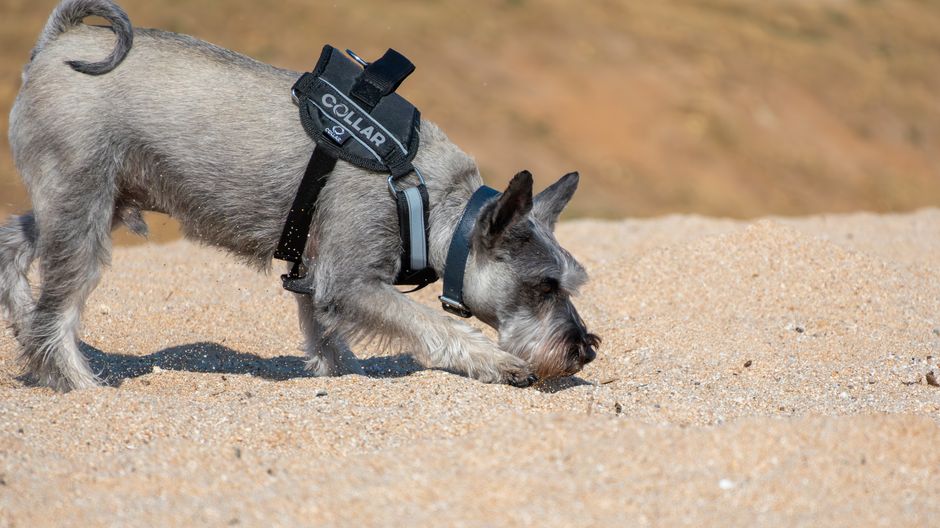
A Bengaluru startup training dogs alongside AI sensors to sniff out cancer sounds like science fiction, but it signals a real shift in how early diagnosis will work worldwide, including in Australia. The short answer: AI-assisted scent detection, whether powered by trained canines or electronic 'e-nose' sensors, is emerging as a low-cost, non-invasive screening layer that Australian healthcare providers and health-tech founders should be tracking closely in 2026.
What Is AI-Powered Canine Cancer Detection?
Cancer cells release volatile organic compounds (VOCs) that alter the scent of breath, urine, and sweat long before a tumour is visible on a scan. Dogs, with roughly 300 million scent receptors compared to a human's six million, can be trained to identify these VOC patterns with striking consistency. The Bengaluru startup behind this approach trains dogs on cancer-positive and cancer-negative samples, then uses AI models to learn the same scent signatures the dogs are responding to.
That second step is the real innovation. Once an AI model is trained on the VOC data validated by canine responses, it can be embedded into a handheld 'e-nose' device or lab sensor that screens thousands of samples without needing a trained dog on-site every time. In effect, the dogs act as the biological ground truth, and the AI turns that into a scalable, repeatable diagnostic tool.
Why It Matters in Australia (2025–2026 Context)
Cancer Council Australia estimates roughly 1 in 2 Australians will be diagnosed with cancer by age 85, and access to early screening is uneven outside major cities like Sydney, Melbourne, and Brisbane. Regional and rural patients often wait weeks for imaging or biopsy results, and a standard diagnostic pathway (GP referral, imaging, pathology) can cost the health system several hundred to several thousand AUD per patient before a diagnosis is confirmed. A cheap, portable, non-invasive scent-based screen could sit ahead of that pathway and flag high-risk patients faster.
For Australian founders and health-tech investors, this isn't just a medical story, it's a market signal. Preventive and early-detection health tech is one of the few categories where government (via the Medical Research Future Fund), private hospitals, and corporate wellness budgets are all willing to spend, which makes it a rare pocket of durable demand in an otherwise cautious 2026 funding environment.
How AI Is Changing Early Cancer Detection
AI's real contribution isn't replacing the dog, it's removing the dog as the bottleneck. A trained detection dog can only work limited hours and needs constant retraining; an AI model trained on the same data can run continuously, be deployed across multiple clinics simultaneously, and improve as more labelled samples are fed into it. This is where most commentary gets it backwards: the story isn't 'AI vs dogs', it's dogs proving the biological signal exists, and AI making that signal commercially deployable at scale.
Call this the Scent-to-Scale framework: Phase 1 uses biological detectors (dogs) to validate that a diagnostic signal is real; Phase 2 trains AI models on that validated data; Phase 3 deploys the AI in low-cost hardware that scales far beyond what any animal-based program could achieve. Australian health-tech teams building in this space should design for Phase 3 from day one, rather than trying to commercialise dog-based screening directly.
Real-World Examples From Bengaluru to Australia
India isn't alone in this field. Medical Detection Dogs, a UK charity, has run clinical trials showing dogs can detect prostate and bladder cancer from urine samples with high accuracy, and the Penn Vet Working Dog Center in the US has published similar findings for ovarian cancer. The Bengaluru startup's contribution is combining that established canine-detection science with AI models trained specifically to replicate and scale the result, rather than treating the dogs as the end product.
In Australia, the groundwork is already partly in place. CSIRO has deep experience running detection-dog programs for biosecurity, and university researchers at institutions such as Monash and UTS have been investigating breath-based VOC analysis for cancer and respiratory disease. What's missing so far is a local startup connecting that research to an AI-driven, commercially deployable screening product, which is exactly the gap the Bengaluru model highlights.
Practical Insights and Actions for Australian Businesses
Pathology networks, private hospital groups, and corporate health providers in Australia should start pilot conversations now rather than waiting for a finished product to arrive from overseas. Partnering early on data collection (with proper ethics approval and patient consent) is the single highest-leverage move, because VOC datasets are the real asset in this market, not the sensor hardware.
The founder mistake we see repeatedly in Australian health-tech is chasing Therapeutic Goods Administration (TGA) approval as an afterthought, after the product is built, instead of designing the clinical validation pathway from the start. The hidden opportunity sits in corporate wellness: an early-detection screening add-on for company health plans is a far faster go-to-market than a hospital diagnostic pathway, and it generates the real-world usage data needed to eventually pursue TGA approval.
Future Outlook for AI-Assisted Diagnostics in Australia
Expect AI-assisted VOC screening to move from research pilots to limited commercial trials in Australia over the next 18 to 24 months, likely starting with prostate and bladder cancer given the existing international evidence base. Regulatory approval will be the gating factor, not the AI or sensor technology, which is already mature enough for pilot deployment.
For Australian businesses building in this space, the software layer, data pipelines, model training, and secure clinical integrations, is where most of the execution risk sits. This is where a development partner like RP SoftTech becomes relevant: building the AI infrastructure, secure data handling, and dashboard tooling that turns a validated diagnostic signal into a deployable product is a specialised software problem, not just a medical one.
Conclusion
The Bengaluru dogs-and-AI story is a preview of where early cancer detection is heading globally, and Australia has the research base, regulatory framework, and health spending to be a fast follower rather than a late adopter. If you're a healthcare provider or founder exploring AI-assisted diagnostics, the practical next step is a technical feasibility audit, not a full product build, to map what data, partnerships, and regulatory pathway your idea actually needs.
