How Could Spatial AI Like Augmodo Reshape Canadian Retail and Beyond in 2026?
Augmodo, a US spatial AI startup that helps retailers track inventory and store activity using camera and sensor networks, just raised $21M USD to move its technology beyond grocery and big-box stores into new physical environments. For Canadian business owners, the headline funding number matters less than the direction it signals: spatial AI is graduating from a retail loss-prevention tool into a general-purpose layer for understanding what happens inside any physical space — a shift that will hit Canadian warehouses, clinics, and service businesses long before most owners are ready for it.
What is the Concept
Spatial AI refers to computer vision and sensor systems that map, track, and interpret activity inside a physical location in real time — where products sit on a shelf, how customers move through a store, which items are out of stock, or how staff time is actually spent. Augmodo built its early product around retail shelf monitoring: cameras and lightweight sensors feed a model that flags empty shelves, mispriced items, and theft patterns without requiring a full store redesign.
The $21M raise is earmarked to take that same underlying technology — object detection, spatial mapping, and anomaly detection — and apply it to environments that look nothing like a supermarket aisle: distribution centres, healthcare facilities, gyms, and quick-service restaurants. In practice, this means the AI stops being a 'retail analytics vendor' and becomes infrastructure for physical operations generally, similar to how cloud accounting software started in one vertical and became a horizontal utility.
Why It Matters in Canada (2025–2026 Context)
Canadian retailers and warehouse operators are dealing with a specific squeeze right now: minimum wage increases across provinces (Ontario at $17.20/hour, BC and others trending similarly), persistent labour shortages in logistics roles, and margin pressure from omnichannel fulfilment. Manually counting shelf stock or auditing warehouse pallets is expensive labour that spatial AI can absorb, freeing staff for higher-value tasks like customer service or order accuracy.
Out-of-stock incidents are one of the most invisible profit leaks in Canadian retail — a shopper in Toronto or Calgary who can't find an item on the shelf often doesn't complain, they just buy it elsewhere or switch brands. A mid-sized grocery banner running 40 stores can plausibly lose tens of thousands of dollars per month in CAD to stockouts that nobody flagged in time. Spatial AI's expansion beyond retail matters in Canada because the same blind spot exists in warehouses, pharmacies, and cannabis retail, where inventory accuracy is tied directly to compliance and revenue.
How AI Is Changing This
The technical shift enabling this expansion is cheaper, more accurate computer vision combined with generative AI models that can interpret ambiguous scenes — not just detect 'an object is missing' but infer 'this shelf pattern suggests a supplier delivery issue, not theft.' That contextual reasoning is what separates spatial AI 2.0 from the first wave of retail camera analytics, which mostly counted heads and flagged motion.
We think about this adoption curve as the Spatial ROI Ladder: Rung 1 is Detection (cameras/sensors identify what's happening), Rung 2 is Analytics (dashboards summarize patterns for humans), Rung 3 is Automation (the system triggers restocking or staff alerts without a human reviewing footage), and Rung 4 is Autonomous Operations (the space adjusts itself — dynamic pricing, automated reordering, robotic restocking). Augmodo's retail customers are mostly on Rungs 1–2 today; the new funding is explicitly aimed at proving Rungs 3–4 in non-retail settings, which is where the real cost savings live.
For Canadian operators, this matters because most vendors selling into this market today stop at Rung 2 — you get a dashboard, not a decision. Businesses that hold out for Rung 3–4 capability, rather than buying dashboard tools now, may get more value per dollar spent, but they also risk falling behind competitors who start collecting spatial data today and layering automation on top later.
Real-World Examples
Canadian grocery banners like Loblaws, Sobeys, and Metro have already piloted shelf-monitoring and inventory-robotics programs in select stores across Ontario and Quebec, largely for out-of-stock detection and price-tag accuracy. These programs mirror exactly what Augmodo built its retail business on, which is why US spatial AI vendors expanding northward is a realistic near-term scenario for Canadian grocery chains rather than a hypothetical one.
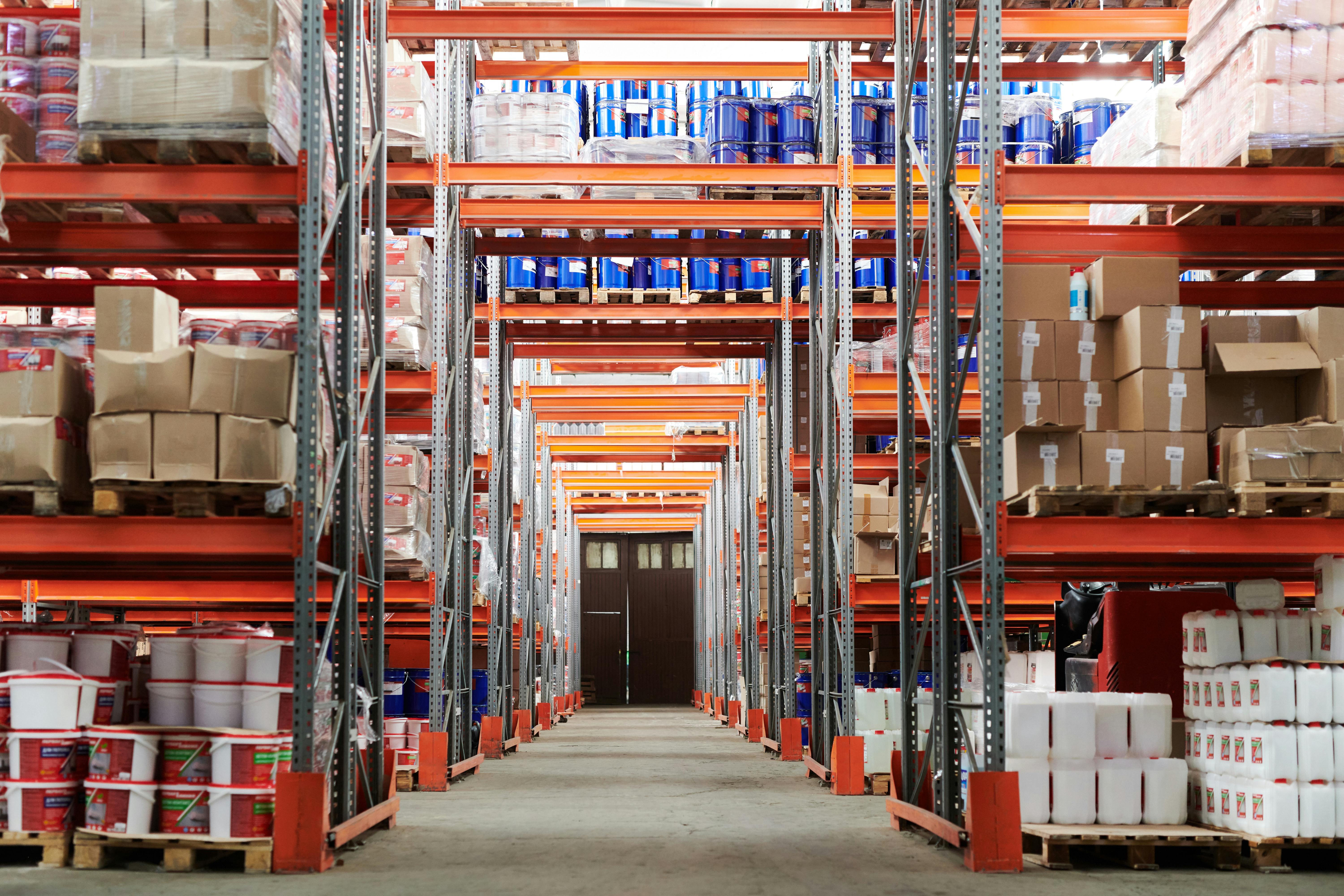
Beyond grocery, Canadian third-party logistics operators serving Amazon Canada and Canadian Tire's distribution network already use computer vision for pallet counting and dock scheduling — an adjacent use case to what Augmodo is now targeting. Provincially regulated cannabis retailers, such as those operating under the Ontario Cannabis Store supply framework, face strict inventory reconciliation requirements, making them a plausible early adopter of spatial AI for automated compliance tracking rather than manual counts.
Practical Insights / Actions
Founders and operators in Canada shouldn't wait for a Canadian-branded version of this technology to show up before acting. Start by auditing where your business currently relies on manual, repetitive physical checks — shelf counts, warehouse audits, clinic waiting-room flow, gym equipment usage — because that's exactly the blind spot spatial AI is built to close, and it's the same blind spot we call 'physical AI debt': the accumulated cost of not knowing what's happening in your own space in real time.
Before signing any vendor contract, run a single-location pilot (one store, one warehouse bay) for 60–90 days and measure it against a concrete CAD cost baseline — labour hours saved, stockout reduction, shrinkage reduction — rather than adopting on vendor promises alone. Because these systems rely on cameras and sensor data covering staff and customers, Canadian businesses must also review PIPEDA obligations around data collection, retention, and consent signage before deployment, particularly in Quebec where Law 25 adds stricter requirements.
A common founder mistake we see in Canadian SMEs is buying generic point-of-sale analytics and assuming it covers 'store intelligence.' POS data tells you what sold — it says nothing about what was on the shelf, how long a customer waited, or why staff time was misallocated. That gap is the hidden opportunity: the business that closes it first in a given city or category earns a real operational edge before competitors even notice the gap exists.
Future Outlook
Expect spatial AI vendors to keep following Augmodo's playbook through 2026–2027: prove the model in retail, then expand into warehouses, healthcare, and hospitality once the underlying detection and reasoning models are reliable enough. Canadian businesses in logistics-heavy or compliance-heavy sectors — cannabis, pharmacy, cold-chain food distribution — are realistic early targets given how directly inventory accuracy ties to revenue and regulatory risk in those categories.
Our strong opinion: the moat in this space won't be the cameras or sensors — hardware costs keep falling and will commoditize fast. The moat is the AI reasoning layer that turns raw spatial data into automated action, and businesses that start collecting their own operational data now, even manually, will have a training-data advantage over those who wait. For Canadian businesses that want to pilot spatial AI or build a custom analytics layer without depending entirely on a single US vendor's roadmap, RP SoftTech works with operators to design and integrate AI-driven operational dashboards suited to Canadian compliance and infrastructure requirements.
Conclusion
Augmodo's $21M raise is a small funding event on paper, but it's a clear signal that spatial AI is moving from a retail niche to general physical-operations infrastructure. Canadian retailers, warehouse operators, and regulated retailers who treat this as a 2027 problem risk losing the labour-cost and inventory-accuracy advantage to competitors who start piloting in 2026.
Frequently Asked Questions
What is spatial AI and how is it different from regular retail analytics software?
Spatial AI uses cameras and sensors to interpret what's physically happening inside a location in real time — shelf stock, foot traffic, staff activity — while traditional retail analytics only reports on completed transactions from POS data.
Is spatial AI technology like Augmodo's available to Canadian businesses yet?
Augmodo currently operates primarily in the US retail market, but Canadian grocery and logistics operators are already piloting comparable computer vision tools, and international vendors typically expand into Canada once a use case is proven domestically.
Do Canadian businesses need to worry about privacy laws when installing AI cameras in-store?
Yes — deployments involving cameras or sensors that could capture customer or employee data must comply with PIPEDA, and businesses operating in Quebec face additional obligations under Law 25, so consent signage and data retention policies should be reviewed before installation.
How much can spatial AI realistically save a Canadian retailer or warehouse operator?
Savings vary by category, but the biggest gains typically come from reduced stockout-driven lost sales and reduced manual audit labour hours; a 60–90 day single-location pilot measured against a clear CAD cost baseline is the most reliable way to estimate real savings before scaling.