What Do Ukraine's Balloon-Smuggled AI Attack Drones Mean for Australia's Ports and Mines in 2026?
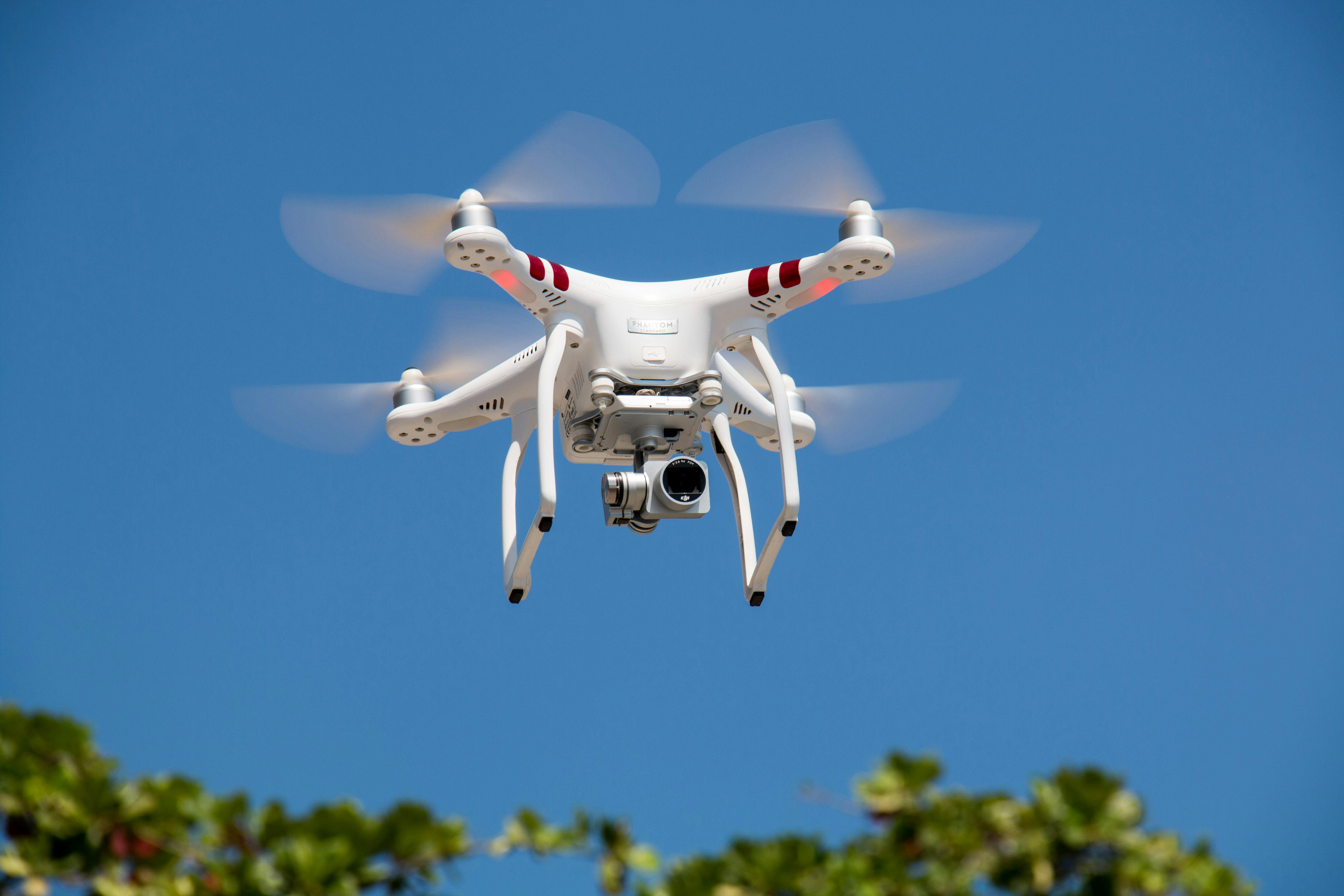
In mid-2026, Russia's Ministry of Defence claimed Ukrainian forces had been smuggling AI-guided attack quadcopters hundreds of kilometres into Russian territory hidden inside weather balloons, cargo trailers and ordinary-looking delivery vehicles, releasing them only once they were past conventional radar lines. For Australian businesses running ports, mines, data centres and energy grids, the takeaway is simple: the same low-cost, AI-guided infiltration tactic used against a nation's air defences can just as easily be aimed at a single high-value commercial site, and most Australian critical infrastructure operators have no detection layer built for it.
What is the Concept
The tactic described by Russian officials works by defeating detection, not firepower. Balloons, trailers and unmarked vehicles are used as 'mules' to carry small quadcopters past the outer perimeter of radar and patrol coverage. Once close enough, the drones are released and fly the final leg themselves, guided by onboard AI vision rather than GPS signals that can be jammed or spoofed.
For Australian operators, the relevant concept isn't military drone warfare — it's asymmetric AI drone infiltration: cheap, commercially available hardware exploiting gaps in perimeter monitoring, access roads, rail corridors and vehicle staging areas where nobody is watching the sky.
Why It Matters in Australia (2025–2026 Context)
Australia's critical infrastructure footprint is uniquely exposed to this style of threat. Remote iron ore and LNG operations across the Pilbara and Northwest Shelf, coal export terminals such as the Port of Newcastle, and energy and data infrastructure along long, sparsely monitored access corridors all share the same weakness the Russian incident highlights: vast ground-level approach routes that are far easier to secure on paper than in practice. Under the Security of Critical Infrastructure Act 2018 (SOCI Act), 'responsible entities' across eleven sectors — including energy, ports, mining-adjacent logistics and data storage — already carry risk management obligations, but drone-specific physical threats remain patchy in most compliance programs.
The business impact is real money, not abstract risk. Security consultants working with Australian ports and energy terminals routinely note that even a single unplanned shutdown at a major export terminal can run into the millions of dollars in lost throughput, remediation and insurance fallout — costs that scale quickly once regulators and insurers start treating drone incursions as a foreseeable risk rather than a novelty.
How AI Is Changing This
Older commercial drones relied on GPS and a remote operator, both of which conventional electronic warfare could disrupt. The drones described in the Russian incident use onboard AI and computer vision to navigate the final approach, which means GPS jamming — still the default countermeasure at many Australian sites — does far less to stop them. That same terminal-guidance technology is now trickling down into off-the-shelf drones sold commercially, including in Australia.
AI cuts both ways, however. Detection systems built around computer vision, radio-frequency sensing and acoustic signatures — the same class of technology used by Sydney-based, ASX-listed DroneShield — are becoming the practical answer to AI-guided drones, because they don't rely on jamming a signal the drone no longer needs.
Real-World Examples
DroneShield's AI-based detection systems, already supplied to allied militaries and increasingly to civil infrastructure operators, are the clearest Australian example of this shift from signal-jamming to sensor-fusion detection. Thales Australia's long-standing work on air-defence and radar systems for Defence sites shows the same layered-detection principle applied at scale, while the Jindalee Operational Radar Network (JORN), which monitors Australia's northern air and sea approaches, illustrates how even sophisticated long-range radar can still leave low-altitude, ground-level gaps — exactly the kind of gap a trailer-launched drone is designed to exploit.
Picture a realistic (illustrative, not actual) scenario at a bulk export terminal like Port of Newcastle: an unremarkable delivery trailer parked near a rail siding releases a small AI-guided drone that films loading infrastructure or briefly disrupts crane operations before anyone identifies where it launched from. No current regulation forces port operators to plan for that specific sequence — which is exactly the blind spot this incident exposes.
Practical Insights / Actions
A useful way to structure the response is the Layered Airspace Defence (LAD) Model: Detect (RF, radar and acoustic sensors covering approach roads and staging areas, not just the perimeter fence), Deter (visible detection signage and patrol patterns that raise the cost of an attempt), and Deny (a documented, tested response protocol — from grounding operations to notifying the Australian Cyber Security Centre or state police — so an alert doesn't sit unactioned).
Before buying any hardware, run a Drone Attack Surface Audit: physically walk access roads, rail corridors and vehicle staging zones to map where a trailer, van or balloon could realistically release a drone unseen. This is where the founder mistake shows up most often — Australian site operators typically audit the fence line and skip the kilometre of approach road leading to it, which is precisely where a mule vehicle would stop. RP SoftTech works with critical infrastructure operators to integrate detection sensor data into a single compliance and monitoring dashboard, so SOCI Act reporting and drone-alert logs live in one auditable system rather than three disconnected tools.
Future Outlook
Expect regulatory pressure to build through 2026 and 2027 as incidents like this one push governments, including Australia's, toward tighter SOCI Act guidance on physical-cyber convergence — treating an AI-guided drone incursion with the same seriousness as a network intrusion.
The contrarian call worth making now: insurers will start pricing 'drone risk' as its own line item for critical infrastructure policies well before regulation forces it, and Australian operators who complete a Drone Attack Surface Audit and build a documented LAD response ahead of that shift will negotiate materially better premiums than those who wait for a mandate.
Conclusion
Russia's account of balloon- and trailer-smuggled AI attack drones is a military story, but the underlying vulnerability — AI-guided drones exploiting unmonitored approach routes — applies directly to Australian ports, mines, energy sites and data centres. The businesses that treat this as a compliance and insurance issue today, not a defence issue for someone else to solve, will be the ones with lower premiums and fewer surprises in 2026. Start with a Drone Attack Surface Audit before deciding what hardware, if any, you actually need.
Frequently Asked Questions
Is my Australian business required to report drone security risks under the SOCI Act?
If you're a 'responsible entity' under the Security of Critical Infrastructure Act 2018 across sectors like energy, ports, mining-adjacent logistics or data storage, you already carry risk management obligations that can extend to physical threats such as unauthorised drones. Confirm scope with your compliance team or the Australian Cyber Security Centre, since drone-specific guidance is still evolving.
How much does counter-drone detection technology cost for a mid-size Australian site?
Costs vary widely with perimeter size and the sensor mix used (RF, radar, acoustic, or electro-optical), but mid-size commercial sites typically budget anywhere from the tens of thousands to several hundred thousand dollars annually depending on coverage area and monitoring depth.
Can GPS jamming stop AI-guided attack drones?
Not reliably. Drones that navigate their final approach using onboard AI vision rather than GPS are largely unaffected by jamming, which is why detection systems based on RF, radar and acoustic sensing are becoming the more effective countermeasure.
What is the first step an Australian business should take to assess drone risk?
Commission a Drone Attack Surface Audit — a physical walk of access roads, rail corridors and vehicle staging areas to identify where a trailer, van or balloon could release a drone undetected, before investing in any detection hardware.