Most founders think the fastest way to ship faster is to hire more engineers. In 2026, that assumption is quietly bankrupting early-stage startups. Teams that pair fewer senior developers with AI coding tools are now shipping features in days that used to take weeks, at a fraction of the payroll cost — and the gap is widening every quarter.
What is the Concept
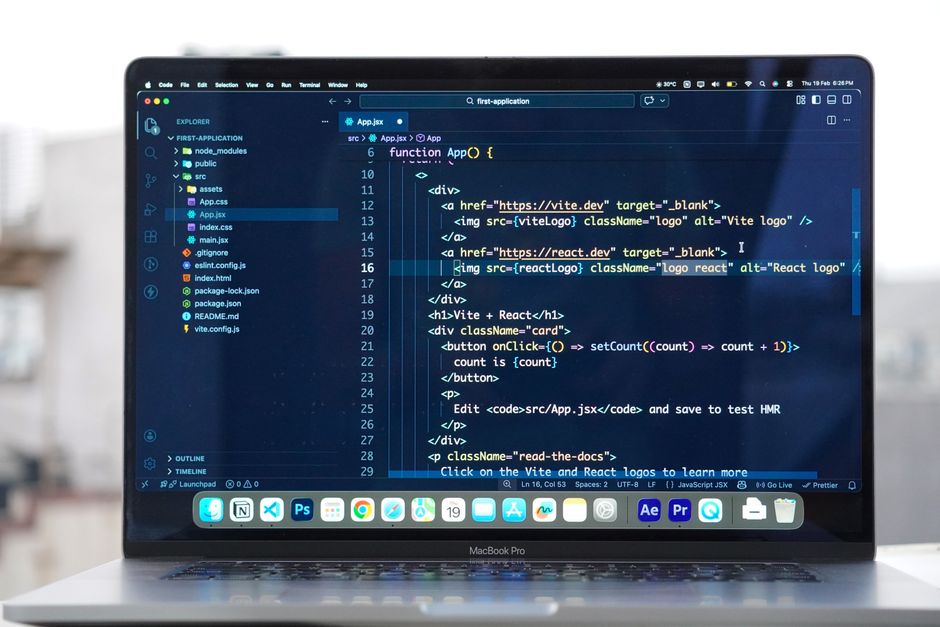
AI-assisted software development refers to using large language model-based tools — such as GitHub Copilot, Cursor, Claude Code, and Replit Agent — directly inside the engineering workflow to write, review, test, and refactor code alongside human developers. Instead of a developer typing every line from scratch, the developer describes intent, and the AI generates a first draft that the engineer edits, verifies, and ships.
This is different from low-code or no-code platforms. Low-code tools replace developers for simple, templated apps. AI coding tools amplify professional developers, letting a smaller team handle the complexity of a much larger engineering org — which is why the cost impact shows up in headcount, not just hourly efficiency.
Why It Matters Now (2025–2026 Context)
Through 2025, AI coding assistants moved from autocomplete novelties to agentic systems that can plan a feature, write tests, open a pull request, and respond to code review comments with minimal supervision. By 2026, engineering leaders are budgeting for AI tool subscriptions the same way they budget for cloud infrastructure — as a fixed operating cost that directly reduces the need for additional hires.
For a bootstrapped or seed-stage startup, this timing matters because engineering salaries remain the single largest line item on the P&L. A team that would have needed six developers to hit a product roadmap in 2023 can often hit the same roadmap with three or four developers plus an AI coding stack in 2026 — freeing runway for sales, marketing, and customer success instead of payroll.
How AI Is Changing This
The biggest shift is the move from AI as an assistant to AI as an agent with limited autonomy. Instead of suggesting one line at a time, tools like Claude Code and Cursor's agent mode can be given a ticket description and asked to implement the full change across multiple files, then explain the diff. Developers shift from 'writing code' to 'reviewing and directing code' — a role change that most engineering managers have not yet formalized in their hiring plans.
Here is the contrarian part most founders miss: junior developer hiring is losing its ROI advantage. Junior engineers historically earned their keep by writing high volumes of routine code cheaply. AI tools now write that routine code for free or near-free, at higher speed and with fewer bugs than a first-year hire. The scarce, valuable skill in 2026 is a senior engineer who can direct AI output, catch subtle architectural mistakes, and own production quality — not someone who can type quickly.
Real-World Examples
GitHub's own research and public case studies from companies using Copilot and Cursor report developers completing coding tasks 30–55% faster depending on task type, with the largest gains on boilerplate, test writing, and refactoring work rather than novel architecture decisions. Replit has built its entire growth strategy around solo founders and two-person teams using its AI Agent to build and deploy full-stack apps that previously required a small team.
Vercel's v0 tool shows a similar pattern in frontend development: product teams generate working UI components from a text description, then spend their engineering time on business logic and edge cases instead of markup and styling. The common thread across these examples is not that AI replaces engineers — it's that AI collapses the time between idea and working prototype, which is exactly where startup runway is won or lost.
Practical Insights / Actions
Use the 3-Layer AI Dev Stack to structure adoption instead of bolting on tools randomly. Layer 1 is AI pair programming inside the editor (Cursor, Copilot, Claude Code) for day-to-day coding. Layer 2 is AI-assisted code review and test generation, which catches bugs before they reach staging and reduces QA overhead. Layer 3 is AI-assisted CI/CD and deployment monitoring, where agents flag anomalies before they become incidents. Most teams only adopt Layer 1 and leave real cost savings — in QA and ops headcount — on the table.
Track your AI Leverage Ratio: the proportion of shipped code that originated from an AI draft versus a fully manual write. Teams with a healthy AI Leverage Ratio above 40% on routine work typically see the clearest budget impact, because it shows AI is handling volume, not just occasionally assisting on hard problems.
The most common founder mistake is treating AI coding tools as a plug-and-play replacement for process. Without code review standards, security scanning, and a clear escalation path for AI-generated changes, teams accumulate hidden technical debt faster than they save time — because AI will confidently generate code that compiles and passes tests while quietly missing a security check or an edge case a senior engineer would have caught. Governance has to scale alongside adoption, not follow it.
Future Outlook
The hidden opportunity in this shift is market access, not just cost savings. A two-person founding team with a strong AI dev stack can now credibly build and ship a product that previously required venture funding and a five-person engineering team just to reach an MVP. Expect more solo-founder and micro-team SaaS companies to compete directly with venture-backed startups on speed to market through 2026 and beyond.
As agentic coding tools mature, the next competitive edge will shift from 'who adopted AI first' to 'who built the best internal review process around AI output.' Startups that invest early in code review discipline and AI governance will compound their cost advantage, while teams that skip governance will eventually pay it back in incident response and rework.
Conclusion
AI coding tools are no longer a productivity nice-to-have — they are a direct lever on your burn rate. Founders who restructure their engineering team around a senior-heavy, AI-assisted model consistently report leaner headcount and faster shipping without sacrificing quality. If you're planning your next engineering hire, it may be worth an audit first: RP SoftTech works with founders to assess where an AI-assisted dev stack can replace planned headcount and where senior engineering judgment still can't be automated.