What Do Google Earth Deepfakes, Data Center Strain, and GPT-5.6 Mean for Canadian Businesses in 2026?
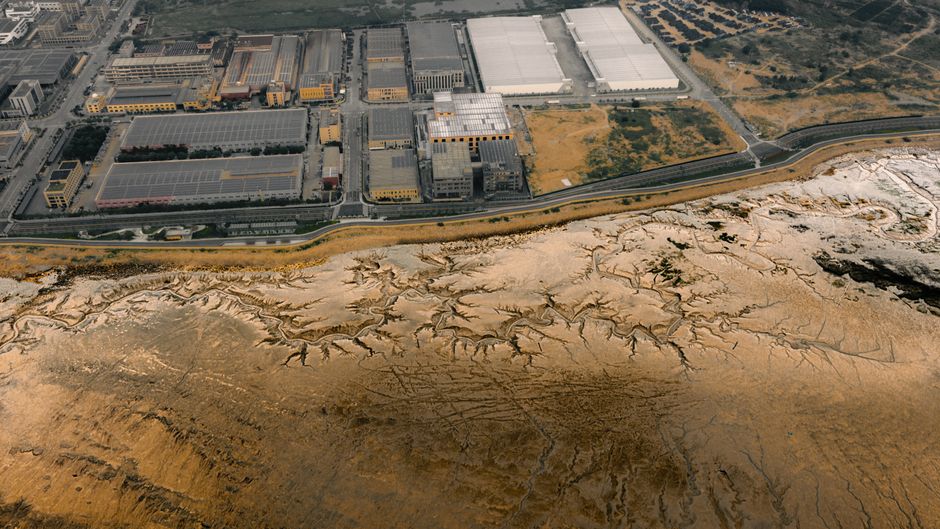
In a single week of August 2026, three AI stories collided: fabricated Google Earth imagery fooling verification systems, data centers straining power grids from Virginia to Alberta, and OpenAI's GPT-5.6 quietly reshaping enterprise workflows. For a founder in Calgary or a CFO in Mississauga, the direct answer is this: AI is no longer just a productivity tool for Canadian businesses — it is becoming a trust, infrastructure, and capability problem all at once, and the companies that treat these as separate issues will fall behind.
What is the Concept
Three distinct but connected AI developments define this update. First, reports of manipulated or AI-generated satellite and aerial imagery appearing in tools like Google Earth are undermining confidence in geospatial data used for property assessments, insurance claims, and supply chain verification. Second, the compute demands of frontier models are pushing data centers to their limits, forcing operators to confront power availability, water cooling, and grid capacity constraints. Third, GPT-5.6's release brings faster reasoning and broader enterprise integration, accelerating how quickly businesses can (and must) operationalize AI.
We call this convergence the AI Trust Triangle: Verification (can you trust the data AI produces or interprets), Infrastructure (can the physical systems support the demand), and Capability (can your business actually use the new model effectively). Every Canadian business adopting AI in 2026 sits somewhere on this triangle, whether it realizes it or not.
Why It Matters in Canada (2025–2026 Context)
Canada has quietly become a data center magnet because of its cold climate and abundant hydroelectric power, particularly in Quebec. Companies like QScale in Lévis have built facilities specifically to capture waste heat and reduce cooling costs, positioning the province as an attractive location for AI compute. But the same demand straining grids in the United States is starting to appear here: local utilities in Quebec and Ontario have flagged rising industrial power requests tied to AI infrastructure, and municipalities are beginning to ask harder questions about new data center approvals near residential areas.
On the verification side, the Canadian Centre for Cyber Security has already issued public guidance on deepfakes and synthetic media, warning businesses and institutions to treat unverified visual and geospatial data with caution. This is directly relevant to Canadian industries that rely on satellite or aerial imagery — agriculture in Saskatchewan, real estate in Vancouver, and insurance underwriting in Toronto all use geospatial tools that could be compromised by fabricated imagery, with real financial consequences if a claim or valuation is based on manipulated data.
How AI Is Changing This
GPT-5.6 and comparable frontier models are changing the calculus by making AI-assisted analysis cheaper and faster to deploy, which means more Canadian SMEs will lean on AI outputs for decisions that used to require manual verification. That is efficient, but it also means an unverified deepfake or a hallucinated data point can propagate into a business decision far faster than before. The contrarian insight here is that faster, more capable AI models do not reduce the need for human verification — they increase it, because the volume and speed of AI-generated content is outpacing our ability to manually check it.
At the same time, the infrastructure strain behind these models is a hidden cost most business leaders never see. When a Canadian company runs enterprise AI workloads through a US-based cloud provider, it is indirectly exposed to that provider's data center capacity issues — meaning slower response times, price increases, or service throttling during peak demand. Businesses that understand this dependency are starting to ask vendors directly where compute is hosted and whether Canadian or Canadian-adjacent capacity (like Quebec's hydro-powered facilities) is available as an alternative.
Real-World Examples
A Toronto-based property insurance broker using satellite imagery for flood-risk assessments now cross-references imagery dates and metadata before finalizing quotes, after industry warnings about manipulated geospatial data circulating online. A Montreal SaaS company evaluating GPT-5.6 for customer support automation ran a two-week pilot specifically testing hallucination rates on Canadian-specific queries (tax terminology, provincial regulations) before wider rollout, catching several inaccurate responses that a faster rollout would have missed. And in Quebec, QScale's partnership model with local utilities shows how a data center operator can align AI infrastructure growth with the province's hydroelectric capacity rather than straining it — a template other provinces are starting to study.
Practical Insights / Actions
For informational purposes, Canadian businesses should audit where their AI vendors host compute and whether geospatial or visual data feeding into any business decision has a verification step. The founder mistake we see most often is treating AI outputs — whether satellite imagery, chatbot answers, or generated reports — as ground truth simply because the model is new and impressive. The hidden opportunity is that businesses who build a lightweight verification layer now (even a simple manual spot-check process) will have a genuine trust advantage over competitors as AI-generated misinformation becomes more common.
Practically, this means three things: assign someone on your team to own AI output verification, ask cloud and AI vendors direct questions about data center capacity and location, and pilot new models like GPT-5.6 on Canadian-specific edge cases before full deployment. None of this requires large budgets — it requires treating AI trust and infrastructure as operational risk categories, not just technology upgrades.
Future Outlook
Expect Canadian regulators to move faster on synthetic media disclosure requirements over the next 12 to 18 months, following the pattern set by the EU's AI Act and building on existing Canadian Centre for Cyber Security guidance. On infrastructure, provinces with surplus clean power — particularly Quebec, Manitoba, and parts of British Columbia — are likely to see continued data center investment, which could become a genuine competitive advantage for Canadian AI hosting if managed well. Businesses that build verification and vendor-location awareness into their AI strategy now will be better positioned when these regulatory and infrastructure shifts arrive.
Conclusion
The August 2026 AI news cycle is not three unrelated stories — it is a single signal that AI trust, infrastructure, and capability are now business risk categories for every Canadian company using these tools. Businesses that apply the AI Trust Triangle to their own operations, verifying data, questioning infrastructure dependencies, and piloting new models carefully, will build durable advantage. If you want help auditing where your business sits on the AI Trust Triangle, RP SoftTech can walk through a practical, no-obligation assessment tailored to your Canadian operations.
Frequently Asked Questions
What are Google Earth deepfakes and why do they matter for Canadian businesses?
Google Earth deepfakes are fabricated or manipulated satellite and aerial images that can misrepresent real locations. For Canadian businesses in insurance, real estate, and agriculture, this matters because decisions like property valuations and flood-risk assessments can be based on unverified imagery, creating financial and legal exposure.
Why are data centers becoming a problem for AI adoption in Canada?
Rising AI compute demand is straining power grids and cooling capacity globally, and Canadian utilities in provinces like Quebec and Ontario are seeing increased industrial power requests tied to data centers. This can affect service reliability and cost for Canadian businesses relying on cloud-based AI tools.
How is GPT-5.6 different for Canadian enterprise use compared to earlier models?
GPT-5.6 offers faster reasoning and broader integration capabilities, allowing Canadian businesses to automate more complex tasks. However, faster deployment increases the need for verification, since errors or hallucinations can scale into business decisions more quickly than with earlier, slower-adopted models.
What should a Canadian business do first in response to these AI trust and infrastructure issues?
Start by assigning ownership of AI output verification within your team, and ask your cloud or AI vendors where compute is hosted and how they handle synthetic media risks. This low-cost first step builds a foundation before piloting newer models like GPT-5.6 on Canadian-specific use cases.