How Will Nvidia NVLink Rivals Affect AI Costs for Australian Businesses in 2026?
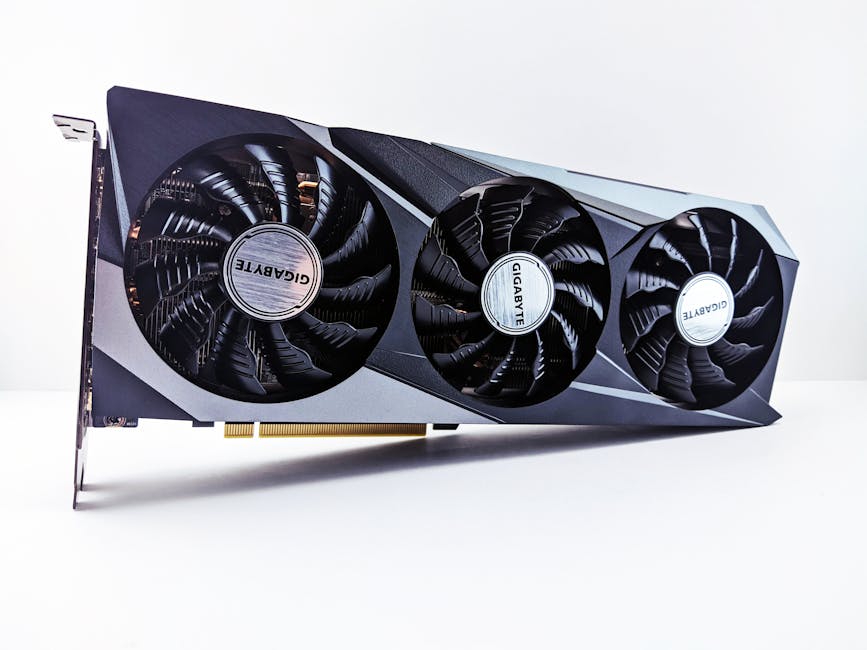
For an Australian startup or enterprise running AI workloads out of Sydney, Melbourne, or a Tokyo/Singapore-region cloud zone, the wires connecting GPUs together matter almost as much as the GPUs themselves. Nvidia's NVLink has become the default toll road for that traffic, and a wave of startups now wants to build a free alternative lane. That fight has direct consequences for AUD-denominated AI infrastructure budgets across Australia.
What is the Concept
NVLink is Nvidia's proprietary interconnect for linking GPUs at high speed inside and across servers. It performs well, but it locks buyers into Nvidia's pricing and supply schedule. Startups such as Enfabrica, Celestial AI, and Ayar Labs, plus the UALink consortium backed by AMD, Broadcom, and major hyperscalers, are building open interconnects using silicon photonics and Ethernet-based scale-up fabrics that aim to match NVLink performance without the single-vendor tax.
For Australian businesses, many of which already pay a premium for compute due to distance from major chip supply chains, this is a build-versus-buy decision playing out at the network layer, with real AUD consequences.
Why It Matters in Australia (2025–2026 Context)
Australian companies training or fine-tuning models locally, or renting GPU capacity from providers with Australian data centre regions, already face higher landed hardware costs than US or European buyers. Interconnect vendor lock-in compounds that premium with every cluster refresh, which is why CTOs at firms in Sydney's tech corridor and Melbourne's fintech scene are watching the NVLink challengers closely.
The UALink 1.0 standard, backed by Microsoft, Google, Meta, AMD, and Broadcom, signals the industry wants a genuine second option, and Australian cloud resellers will likely follow hyperscaler adoption rather than lead it.
How AI Is Changing This
Distributed training software is tightly tuned to Nvidia's stack, so Australian teams cannot simply swap interconnects without re-validating performance, which is a real switching cost for local infrastructure teams with lean headcount. Inference workloads, however, are far more portable, and that is where local providers are most likely to trial open-interconnect hardware first.
Contrarian take: the winner of this race in the Australian market will not be the fastest interconnect, but the one a local cloud provider bundles in as a drop-in option, because most Australian buyers rent compute rather than build clusters themselves.
Real-World Examples (Prefer Australia)
Australian cloud providers reselling GPU capacity, including local NVIDIA partners and regional data centre operators in Sydney and Melbourne, currently pass Nvidia's interconnect pricing straight through to customers. If Broadcom's Ethernet-based Tomahawk switches or UALink-compliant hardware reach the hyperscaler regions serving Australia, local resellers would gain a genuine price lever for the first time. Astera Labs' rise to a multi-billion-dollar valuation, built purely on connectivity chips adjacent to Nvidia's stack, shows global investors already treat this as its own category, and Australian enterprise buyers will feel the downstream pricing effects.
Practical Insights / Actions
- Ask your Australian cloud or GPU-as-a-service provider whether their roadmap includes UALink or open scale-up fabric support before signing multi-year contracts.
- Model interconnect and networking cost in AUD separately from raw GPU rental cost when budgeting AI infrastructure.
- Pilot inference workloads on open-interconnect capacity first, since the migration risk is lower than for training clusters.
- Treat single-vendor interconnect dependency as a supply-chain risk in board reporting, not just a line-item cost.
The founder mistake we see most often among Australian AI teams: negotiating hard on per-GPU-hour pricing while ignoring the interconnect and networking surcharge bundled into the same invoice, which can add twenty to thirty percent to a cluster refresh.
Future Outlook
By 2027, expect most large Australian cloud and AI infrastructure providers to offer a hybrid interconnect option, Nvidia's proprietary fabric for top-tier training workloads and open, UALink-style fabrics for inference and mid-tier training. The hidden opportunity for Australian SMEs is that increased competition at the interconnect layer should push GPU rental pricing down across the board, even for businesses that never directly touch a UALink product.
Conclusion
The race to replace NVLink will shape AI infrastructure economics for Australian businesses for years, given the country's existing compute cost premium. Teams that start auditing interconnect risk and cost today, rather than treating it as an afterthought bundled into GPU pricing, will negotiate from a position of strength at their next cluster refresh or cloud contract renewal.
Frequently Asked Questions
What is NVLink and why does it affect AI costs for Australian businesses?
NVLink is Nvidia's proprietary high-speed interconnect linking GPUs together. It affects Australian businesses because it locks buyers into Nvidia's pricing for the network layer of a GPU cluster, adding to an already higher compute cost base driven by distance from global chip supply chains.
What is UALink and could it lower AI infrastructure costs in Australia?
UALink is an open interconnect standard backed by AMD, Broadcom, Google, Meta, and Microsoft that aims to match NVLink performance without single-vendor lock-in. If Australian cloud providers adopt it, it could add real price competition to GPU cluster networking costs.
Should Australian startups worry about GPU vendor lock-in in 2026?
Yes, particularly startups planning multi-year AI infrastructure spend. Interconnect lock-in compounds with each hardware refresh, and Australian buyers already pay a compute cost premium, so modeling this risk early can prevent significant budget overruns.
Which companies are building alternatives to Nvidia's NVLink?
Enfabrica, Celestial AI, and Ayar Labs are building open interconnect hardware, alongside Broadcom's Ethernet-based switches and the UALink consortium of AMD, Google, Meta, and Microsoft, all aiming to offer scale-up fabrics that do not depend on a single GPU vendor.