
Washington's tariff wall is meant to rebuild American factories, but the loudest winners next door may be in Ontario, Quebec, and British Columbia, not Ohio. As U.S. tariffs on Chinese, Vietnamese, and other overseas imports push American buyers to look for faster, tariff-exempt suppliers under USMCA, Canadian manufacturers are sitting on an unexpected 2026 growth opportunity that most business owners have not yet mapped out.
What is the Concept
The 'U.S. manufacturing renaissance' refers to a wave of reshoring and factory investment inside the United States, driven largely by tariffs on imports from China and other low-cost manufacturing hubs. As those tariffs raise the landed cost of overseas goods, American buyers, from auto assemblers to appliance makers, are hunting for suppliers that are geographically close, tariff-compliant under USMCA, and able to ship on short lead times.
For Canada, this is not a spectator event. Under USMCA rules of origin, qualifying Canadian-made parts and components can enter the U.S. tariff-free, giving manufacturers in Windsor, Hamilton, Guelph, and Montreal a structural cost advantage over suppliers in Asia now facing 20 to 60 percent tariff surcharges. The renaissance is American in headline, but the supply chain math increasingly runs through Canada.
Why It Matters in Canada (2025–2026 Context)
Canada's manufacturing sector, roughly 10 percent of GDP and concentrated in Ontario's auto corridor and Quebec's aerospace and metals belt, has spent the past two years absorbing its own set of retaliatory and sector-specific tariffs on steel, aluminum, and autos. That pressure has forced many mid-sized manufacturers to diversify beyond single-customer dependency on the U.S. market. But the same tariff environment squeezing some sectors is opening doors in others: any American buyer that used to source subcomponents from China now needs a USMCA-compliant alternative, and Canada is the closest, most integrated option on the map.
Firms like Linamar in Guelph and Magna International in Aurora have already been expanding capacity to absorb reshored automotive contracts. Smaller Tier 2 and Tier 3 suppliers across Ontario are seeing renewed RFQ volume from U.S. OEMs that would have gone to Southeast Asia two years ago. This is a real 2026 procurement shift, not a theoretical trend, and it rewards Canadian manufacturers who can prove tariff-compliant origin and fast turnaround over those who wait for demand to arrive on its own.
How AI Is Changing This
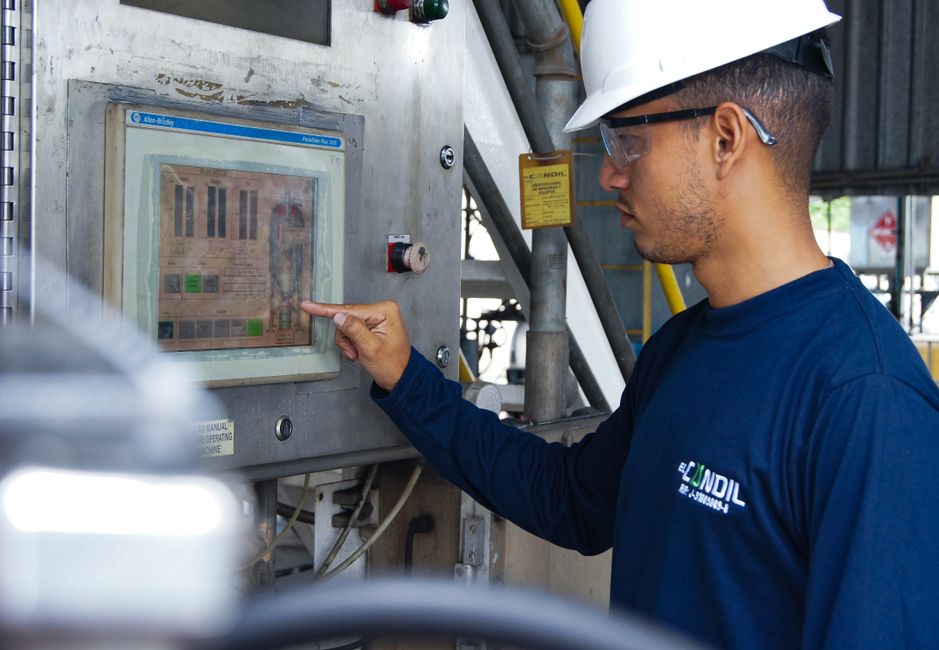
The contrarian insight here: tariffs did not create this opportunity, speed did. U.S. buyers switching suppliers under tariff pressure are not just price-shopping, they are stress-testing for reliability, and AI-driven production planning is what lets a Canadian manufacturer credibly promise faster, more predictable delivery than a legacy Asian supply chain. AI-based demand forecasting and dynamic scheduling tools now let mid-sized Canadian plants quote realistic lead times within hours instead of days, which is often the deciding factor when a U.S. buyer is comparing three reshoring bids.
AI is also reshaping tariff-origin compliance itself. Instead of manually tracking USMCA rules-of-origin documentation across hundreds of SKUs, manufacturers are using automated compliance software to flag which product lines qualify for duty-free treatment and which do not, a task that used to require a full-time trade compliance hire. For a plant with a lean back office, that automation can be the difference between winning a reshoring contract and losing it to paperwork delays.
Real-World Examples
Stelco in Hamilton has leaned into USMCA-compliant steel supply as U.S. buyers face tariffs on Asian steel imports, positioning its product as a domestic-equivalent alternative for American fabricators. In Quebec's aerospace cluster, Tier 2 suppliers around Montreal have picked up overflow machining contracts from U.S. primes looking to shorten and de-risk their supply chains away from overseas vendors. These are not hypothetical scenarios; they reflect the procurement behavior already visible in 2025-2026 RFQ activity across Ontario and Quebec's industrial base.
A useful mental model here is what we call the Tariff Resilience Ladder: rung one is diversifying customer geography so no single tariff decision can sink the business; rung two is automating production data so lead times can be quoted with confidence; rung three is formalizing USMCA origin documentation so compliance is never the bottleneck; rung four is building a domestic-supply brand story that U.S. buyers can point to internally when justifying a switch away from overseas vendors. Manufacturers who climb all four rungs are the ones actually capturing the renaissance, not just reading about it.
Practical Insights / Actions
The most common founder mistake is treating tariffs as a defensive issue only, tracking what it costs to import raw materials, while ignoring the offensive opportunity of becoming the preferred alternative supplier for U.S. buyers fleeing tariffed regions. A Canadian manufacturer that spends CAD 15,000 to 40,000 formalizing USMCA compliance documentation and quoting infrastructure can realistically unlock six or seven-figure reshoring contracts that were previously going to overseas competitors, a return most SMEs never model because they are focused on cost defense rather than demand capture.
The hidden opportunity is proximity itself. A plant in Windsor or Hamilton can quote a two-day truck delivery to Detroit or Cleveland, something no Vietnamese or Chinese supplier can match regardless of price. That is the concept we call Border-Adjacent Manufacturing Advantage, or BAMA: Canadian manufacturers within a day's drive of major U.S. industrial hubs hold a structural edge in the reshoring race that has nothing to do with unit price and everything to do with logistics certainty, and few founders are actively marketing that advantage to prospective U.S. buyers.
Future Outlook
Expect U.S. tariff policy to remain a moving target through 2026, with sector-specific carve-outs and renegotiated exemptions creating ongoing uncertainty. Canadian manufacturers that build flexible, AI-supported production planning and airtight USMCA documentation will be positioned to move quickly whenever new tariff rounds shift buyer behavior again, while those relying on manual processes will keep missing time-sensitive RFQ windows. Over the next 18 to 24 months, the winners will be manufacturers who treat tariff volatility as a recurring sales trigger rather than a one-time shock to absorb.
Conclusion
The U.S. manufacturing renaissance is a tariff story on the surface, but for Canadian manufacturers it is really a speed and compliance story. The businesses that automate their production visibility, formalize USMCA origin documentation, and actively market their border-adjacent proximity to U.S. buyers will be the ones converting tariff turmoil into new contracts in 2026. RP SoftTech works with Canadian manufacturers to build the automation and data systems behind that kind of tariff-ready operation, turning compliance and speed into a competitive advantage instead of a back-office burden.