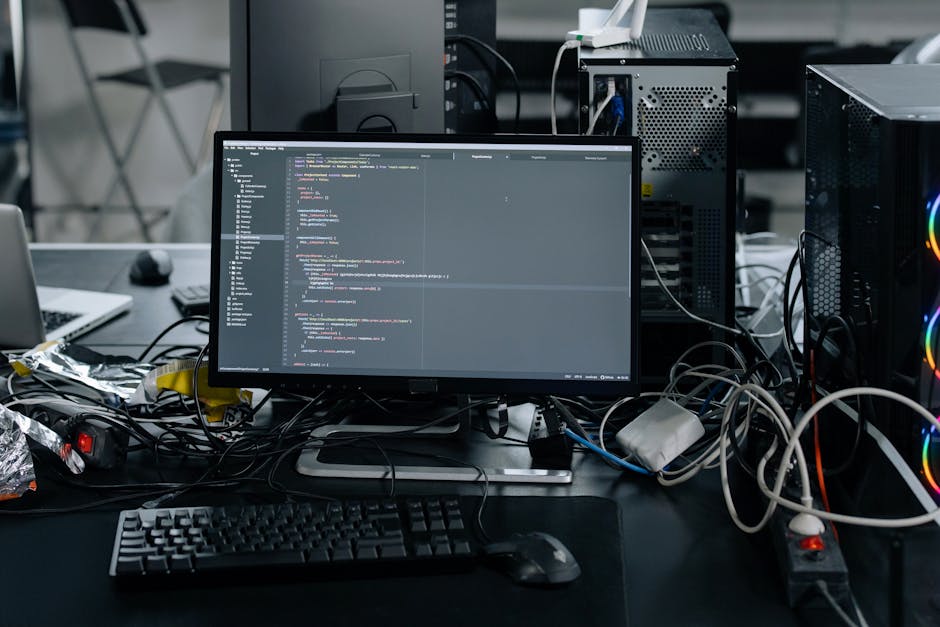
Samsung just put $230 million behind a Dutch AI chip startup racing to challenge Nvidia. For most readers, that's a chip-industry story. For Canadian founders and CTOs paying Nvidia GPU prices in CAD to run their AI products out of Toronto, Vancouver, or Montreal, it's a direct signal about where their single biggest infrastructure cost is headed next.
What is the Concept
The investment is part of a broader 'alternatives quest' — large tech players funding challengers to Nvidia's near-monopoly on AI training and inference chips. Nvidia currently controls the overwhelming majority of the AI accelerator market, which has let it set pricing with little competitive pressure. When a company like Samsung backs a credible rival, it signals that even chip giants believe the current pricing power is unsustainable long-term.
For a Canadian startup or mid-market company, this matters because GPU rental and procurement costs — often billed in USD and converted back to CAD at unfavourable rates — are frequently the largest line item in an AI product's cost structure.
Why It Matters Now (2025-2026 Context)
Canadian companies spent 2024 and 2025 absorbing steep GPU price hikes and multi-month waitlists for Nvidia's latest chips, compounded by currency exposure that made US-denominated compute bills even more volatile for CFOs to forecast. That scarcity forced many startups to either overpay, over-provision cloud capacity 'just in case,' or delay AI features entirely. A well-funded Nvidia challenger, even a distant one, gives Canadian procurement teams leverage in vendor negotiations they simply didn't have in 2023.
The contrarian insight: most Canadian businesses assume GPU costs will only keep climbing, made worse by exchange rate risk. In reality, 2026 is shaping up to be the first year meaningful competitive pressure enters the AI chip market, and pricing power rarely survives real competition for long.
How AI Is Changing This
Ironically, AI workload diversity is what makes alternative chips viable. Not every AI task needs Nvidia's top-tier training silicon — inference workloads, smaller fine-tuned models, and many production AI features can run on cheaper, purpose-built accelerators. As alternatives from funded startups mature, Canadian companies gain the option to route different workloads to the cheapest capable hardware instead of defaulting to Nvidia for everything by habit.
The non-obvious idea: the real savings for Canadian businesses in 2026 won't come from a single 'Nvidia killer' chip, but from finally having the leverage to mix vendors — something the current market has made nearly impossible.
Real-World Examples
Cloud providers and mid-size AI companies across North America have already begun piloting non-Nvidia inference chips for high-volume, lower-complexity workloads like customer support bots and recommendation engines, while reserving Nvidia GPUs for frontier model training. This mirrors what RP SoftTech sees with Canadian SME clients: the businesses cutting AI costs fastest aren't the ones chasing the newest model, they're the ones auditing which workloads actually need premium compute versus commodity capacity.
Practical Insights / Actions
Canadian founders and CTOs should apply what we call the Workload Tiering Framework: classify every AI workload as either compute-critical (needs frontier-grade chips) or compute-flexible (can run on cheaper alternatives), then actively shop the flexible tier as new entrants like Samsung-backed challengers reach production maturity. Waiting for one company to 'beat Nvidia' outright is the wrong bet.
The founder mistake to avoid: locking into multi-year, single-vendor GPU contracts priced in a foreign currency right as competitive alternatives are emerging. The hidden opportunity is that Canadian companies who stay flexible now will negotiate materially better AI infrastructure pricing in 2027 than those who don't.
Future Outlook
Expect more chip giants and hyperscalers to fund or build Nvidia alternatives through 2026 and 2027, gradually chipping away at premium pricing on mid-tier and inference workloads even if Nvidia keeps its lead on frontier training chips. Canadian procurement teams that track this market closely will have real negotiating leverage — and reduced currency exposure — well before the broader market catches on.
Conclusion
Samsung's $230 million bet on an Nvidia rival isn't just a chip-industry headline — it's an early signal that the AI compute cost structure Canadian businesses have accepted as fixed is starting to loosen. Companies that start tiering their AI workloads now will be positioned to capture the savings first. RP SoftTech helps growing Canadian businesses audit AI infrastructure spend and route workloads to the most cost-effective compute available.