
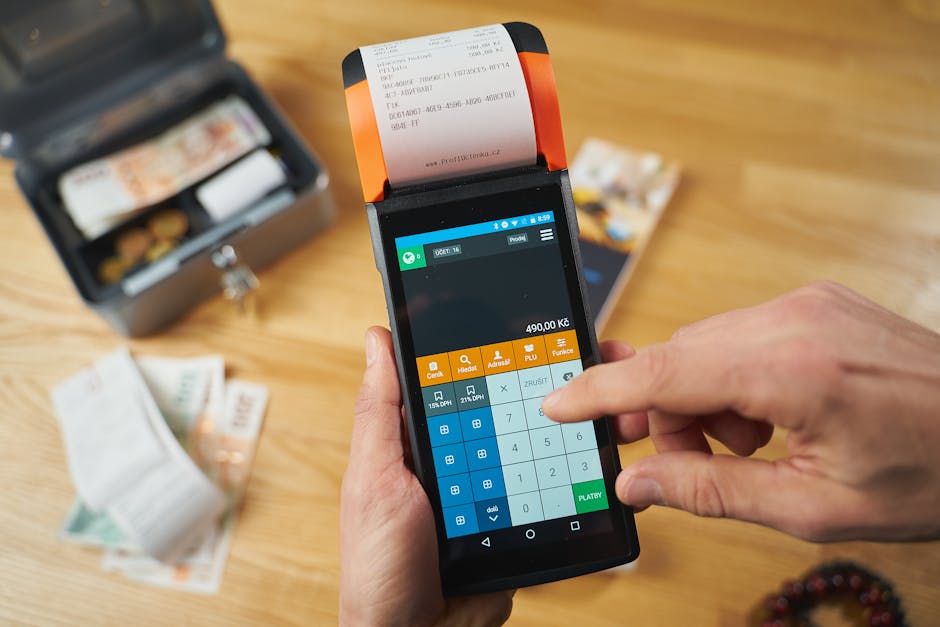
Most UK small business owners think Making Tax Digital is a software problem. It isn't — it's a data problem. From April 2026, sole traders and landlords earning over £50,000 must file quarterly digital updates with HMRC, and the businesses that struggle won't be the ones with the wrong software, but the ones still typing numbers into it by hand.
What is the Concept
Bookkeeping automation means connecting your bank feeds, invoicing, and expense capture directly into your accounting software so figures flow in without manual re-entry. For MTD compliance specifically, this means every transaction is digitally recorded at source — a receipt photographed on a phone, a bank transaction categorised automatically, an invoice generated and reconciled without a spreadsheet in sight.
This is different from simply 'having Xero or QuickBooks'. Plenty of UK SMEs are technically MTD-compliant on paper but still spend six to eight hours a month reconciling data manually because their systems aren't actually talking to each other. Automation closes that gap — it's the difference between digital record-keeping and digital record-keeping that runs itself.
Why It Matters in United Kingdom (2025–2026 Context)
HMRC's phased rollout of Making Tax Digital for Income Tax Self Assessment begins with sole traders and landlords above the £50,000 threshold in April 2026, extending to those above £30,000 the following year. For an SME in Manchester or Leeds running a trades business, retail shop, or consultancy, this isn't optional — quarterly digital submissions become a legal requirement, not a best practice.
The real cost isn't the £10–£30 a month for compliant software. It's the founder time lost to admin. A typical UK sole trader spends roughly 40–50 hours a year on manual bookkeeping under the old annual system; quarterly filing under MTD, done manually, can double that. At even a conservative £40/hour opportunity cost, that's £1,600–£3,200 a year in lost billable or growth time — money most SMEs would rather put toward client work or hiring.
How AI Is Changing This
AI-powered OCR (optical character recognition) now reads receipts and invoices, extracts VAT and supplier data, and categorises expenses with accuracy rates that beat manual entry — reducing the categorisation errors that are a common trigger for HMRC compliance checks. Tools like Dext, AutoEntry, and native AI features in Xero and QuickBooks now flag anomalies (a duplicate invoice, an unusually large expense) before they become a filing problem, not after.
The contrarian point most advisors miss: the value of AI here isn't speed, it's error reduction. A quarterly filing system means mistakes compound four times a year instead of once. An SME that automates categorisation isn't just saving hours — it's reducing the statistical chance of an HMRC query that could cost far more in accountant fees and stress than the software itself.
Real-World Examples
Consider a typical scenario: a five-person electrical contracting business based in Birmingham, invoicing clients weekly and buying materials from multiple suppliers. Before automation, the owner spent Sunday evenings manually entering receipts — around 30 minutes per week, plus a stressful scramble each quarter. After connecting bank feeds and receipt-scanning software, that admin dropped to under 10 minutes a week, with the AI pre-categorising 90%+ of transactions correctly on the first pass.
A London-based freelance design consultancy offers a second pattern: because MTD requires quarterly rather than annual submissions, the founder switched from manual spreadsheets to an automated invoicing and expense tool mid-year specifically to avoid the four-times-a-year admin spike. The lesson in both cases is the same — automation pays off fastest for businesses with frequent, small transactions, which describes most UK trades and service SMEs.
Practical Insights / Actions
Use the Bookkeeping Automation Ladder to assess readiness: Rung 1 — Digitise (move receipts and invoices off paper); Rung 2 — Connect (link bank feeds directly to accounting software); Rung 3 — Automate (let AI categorise and reconcile transactions); Rung 4 — Predict (use cash flow forecasting from clean, automated data). Most non-compliant SMEs are stuck on Rung 1 while believing they're on Rung 3.
The founder mistake to avoid: buying MTD-compliant software as a 'digital sticking plaster' — ticking the compliance box without connecting bank feeds or automating categorisation, then continuing manual entry anyway. This delivers none of the time savings and all of the software cost. The hidden opportunity is reframing MTD not as a compliance burden but as a forcing function to finally fix bookkeeping processes that were already costing hours every month, deadline or not.
Future Outlook
As the £30,000 threshold brings more sole traders into MTD from 2027, demand for automated bookkeeping will accelerate across every UK high street sector — from hospitality to trades to consultancy. Expect accounting software providers to push further into predictive AI: automatic VAT flagging, real-time profit alerts, and even automated quarterly submission drafts requiring only founder sign-off rather than manual entry.
Businesses that build automated financial data pipelines now won't just be MTD-ready — they'll have real-time visibility into cash flow and profitability that most UK SMEs currently only get once a year from their accountant. That visibility, not the compliance checkbox, is the actual competitive advantage.
Conclusion
Making Tax Digital is arriving whether UK SMEs are ready or not, and the businesses that treat it as a data automation opportunity — not a software purchase — will spend 2026 saving hours instead of losing them. If your bookkeeping still relies on manual entry, the smartest move is auditing your current process now, well before the April 2026 deadline creates a rush. RP SoftTech works with UK SMEs to build automated financial and operational workflows that go beyond basic compliance, connecting bank feeds, invoicing, and reporting into one system founders can actually trust.